Why the first 72 hours matter more than you think
Waiting even a few days costs you real money because unemployment has waiting periods, SNAP takes time, and interest keeps compounding. Move fast, even before you have a plan.
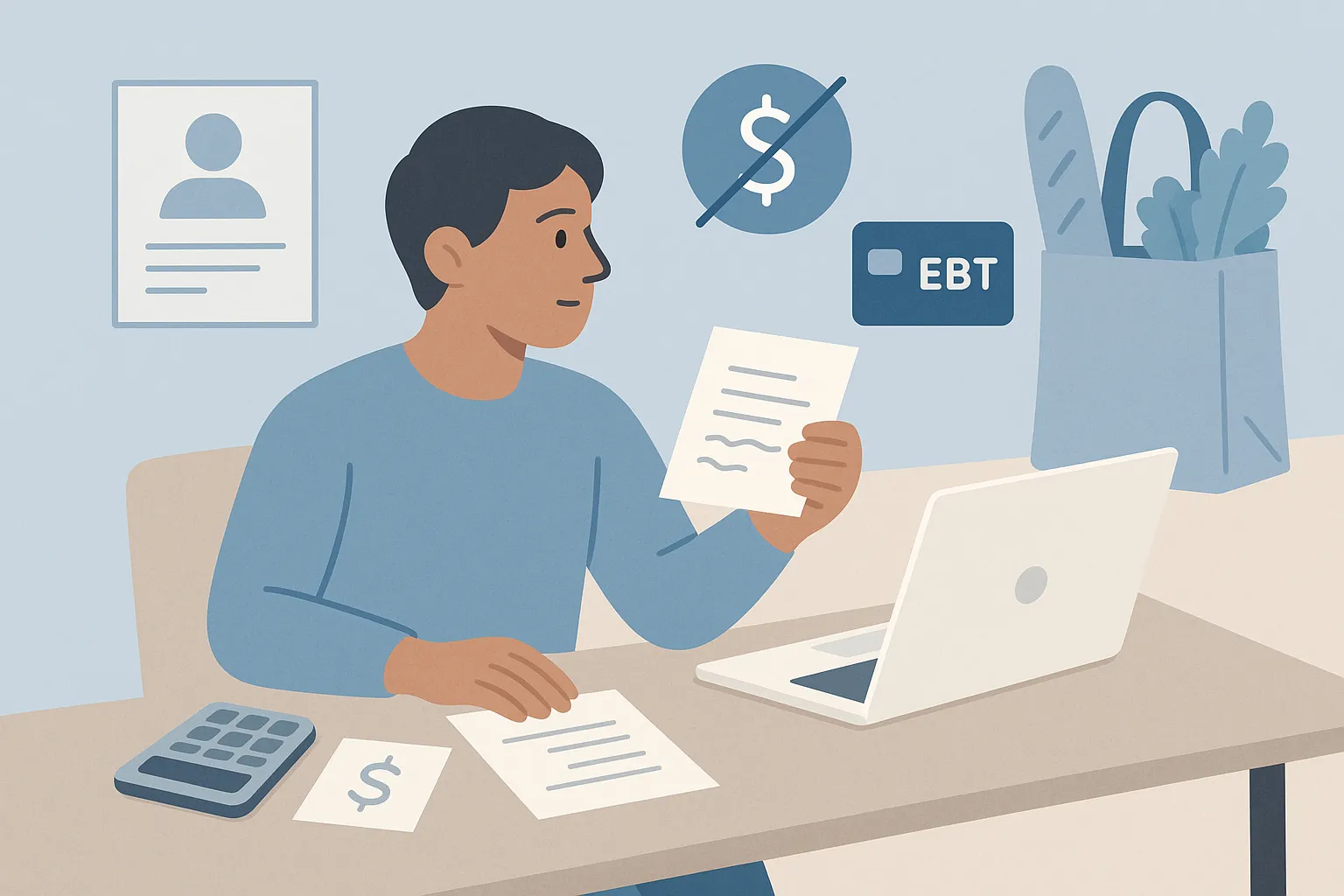
Losing a job feels like the floor dropping out. The income stops, but the rent, the groceries, the car payment, the phone bill, none of it pauses. And the first instinct for a lot of people is to freeze, to wait and see if something shakes loose before taking any drastic action. Here's the thing: waiting even a week costs you. Unemployment has a mandatory waiting period in most states. SNAP takes time to process. Every dollar of credit card interest compounds daily. The people who come through this period in the best shape are the ones who move in the first 72 hours, even before they know what their next job looks like.
Build your emergency budget in one sitting
List every monthly obligation, total your accessible savings, and calculate your runway in weeks. That one number clarifies every decision you'll make this month.
Your first job in the next 24 to 48 hours is not to find a new income. It's to stop the financial bleeding. Start with a piece of paper or a free spreadsheet and list every single monthly obligation you have. Not what you wish you spent. What actually comes out. Rent or mortgage, utilities, groceries, minimum debt payments, subscriptions, insurance premiums. Total it up. Then look at your checking account balance and any accessible savings. That number, your runway, is the only number that matters right now. If you have $2,400 in savings and $2,000 in monthly obligations, you have roughly 5 to 6 weeks before things get critical, assuming zero income. Write that number down. It clarifies everything.
How to prioritize bills when money is short
Housing first, then utilities, then food, then transportation. Credit cards fall near the bottom. Protecting your shelter is always the priority, and you can rebuild credit later.
Here's how I'd prioritize your bills, in order. First: housing. An eviction or foreclosure creates problems that last years. Second: utilities, because heat, water, and electricity are health issues. Third: food. Fourth: transportation, if your job search depends on having a car. Fifth: minimum payments on secured debts like auto loans. Credit cards? Honestly, they fall near the bottom for now. Missing a credit card payment hurts your score, but it will not put you on the street. Call your card issuers and ask about hardship programs before you skip a payment, but do not raid your grocery budget to keep your utilization ratio pretty. You can rebuild credit. You can't un-lose your apartment.
File for unemployment the same day you lose your job
Don't wait to see if you find work quickly. File immediately, because most states have a one-week unpaid waiting period and every delay is benefits you can't recover.
File for unemployment the same day you lose your job, or the very next morning. I know it feels premature if you think you might find work in two weeks. File anyway. Most states impose a one-week unpaid waiting period before your first benefit payment, and some have two. Every day you delay is a day of benefits you cannot recover. The Department of Labor's CareerOneStop site at careeronestop.org lets you find your specific state's unemployment insurance portal in about 30 seconds. Benefits vary widely: as of 2024, the average weekly unemployment benefit nationally is roughly $400 to $450, according to federal labor statistics, but your benefit will be calculated from your own wage history. The math matters. If you were earning $3,500 per month, a benefit of $1,600 to $1,800 per month still leaves a gap. Knowing that gap early lets you plan for it.
Apply for SNAP right away, even if you're not sure you qualify
Income thresholds are higher than most people expect. Apply the same week you file for unemployment, and ask about expedited processing if cash is tight right now.
Apply for SNAP the same week you file for unemployment, even if you think you might not qualify. Income thresholds are higher than many people assume. A family of four can earn up to 130 percent of the federal poverty level in gross monthly income and still qualify, and that limit rises with household size. A single adult who just lost a $40,000-per-year job will likely meet income requirements during the gap months. The application is available online in most states through your state's health and human services portal. Bring documentation of your last pay stub, your termination notice or layoff letter, and your monthly expenses. Processing typically takes 30 days, but if your household is in immediate need, ask about expedited SNAP, which can be approved in as few as 7 days for households with very low cash on hand.
Food banks are not a last resort. Use them now.
Local food banks exist exactly for situations like this. Using them while you wait on SNAP can free up $200 to $400 per month in cash for bills food banks can't cover.
While you wait on SNAP, get into your local food bank network. I'd go straight to feedingamerica.org and use the food bank finder, which searches by ZIP code. This is not charity as a last resort. It's a resource that exists specifically for this situation, and using it preserves the cash you have for bills that food banks can't cover. Many food banks also distribute household supplies, diapers, and personal care items. If you have kids, check for summer food programs or school-based pantries as well. The combined effect of food bank visits plus SNAP, once approved, can free up $200 to $400 per month in cash flow for a family of four, depending on household size and previous grocery spending. That's meaningful runway.
Beyond SNAP and food banks, there's a short-stack of grocery savings moves that cost nothing but a few minutes. Download the store apps for your two nearest major grocery chains. Most chain apps now offer digital coupons that stack with sale prices, and some loyalty programs give you instant fuel discounts too. Plan meals around what's on sale that week, not around what you're craving. Proteins like dried beans, lentils, canned fish, and eggs are the most cost-efficient calories you can buy. A pound of dried lentils costs under $2 and yields roughly 8 to 10 servings of protein. Frozen vegetables hold their nutrition and cost a fraction of fresh when fresh produce is out of season. These aren't permanent sacrifices. They're tactical moves for a temporary window.
Tap 211 and local emergency programs before you run out of options
The 211 service connects you to local rental help, utility assistance, and emergency food. Call or text 211 this week, before bills go past due, not after.
One thing people miss in a job loss crisis is the universe of one-time emergency assistance programs available at the local level. Your state's 211 service (call or text 211, or visit 211.org) connects you with local nonprofits and government programs covering utility shutoff prevention, rental assistance, prescription help, and emergency food. LIHEAP, the Low Income Home Energy Assistance Program, is a federal program administered by states that can help cover heating and cooling costs. The CFPB recommends reaching out to utility companies directly and asking about budget billing, deferred payment plans, or low-income rate programs before a shutoff notice arrives. Most utilities have these programs but won't volunteer the information unless you ask. Call them this week.
Don't let healthcare coverage lapse
Job loss opens a Special Enrollment Period for Marketplace plans, which are often cheaper than COBRA. Compare costs now, and check Medicaid eligibility if your income drops sharply.
Protect your healthcare access early. If you had employer-sponsored insurance, you're typically eligible for COBRA continuation coverage, but the premiums can be jarring because you're now paying both your share and your former employer's share. For many people, a Marketplace plan through healthcare.gov will be cheaper. Job loss is a qualifying life event that opens a Special Enrollment Period, so you don't need to wait for open enrollment. Compare costs carefully. If your income drops low enough during unemployment, you may qualify for Medicaid, which is free or very low cost. The income thresholds vary by state, but in states that expanded Medicaid, a single adult earning under roughly $20,000 annually often qualifies. Don't go uninsured to save money short-term. One urgent care visit without coverage can cost $300 to $500 and an ER visit can run into thousands.
Your 30-day action plan, week by week
The first month is triage. File benefits, protect shelter, reduce expenses, and follow up on every application. Stabilize first, then job search from a calmer place.
Here's what the next 30 days should look like, laid out plainly. In the first 72 hours: file for unemployment, build your emergency budget, and call your landlord or mortgage servicer to flag the situation before you miss a payment. In the first week: apply for SNAP, visit a food bank, call your utility companies about hardship plans, and look up your state's 211 resources. In the first two weeks: check healthcare coverage options, call credit card companies about hardship programs, and audit every subscription you pay for. In the first month: review your budget weekly, follow up on any pending benefit applications, and keep job searching in parallel. None of this is permanent. It's triage. The goal is to stabilize cash flow so you can think clearly and make good decisions, instead of reacting to every overdraft notice in a panic.


