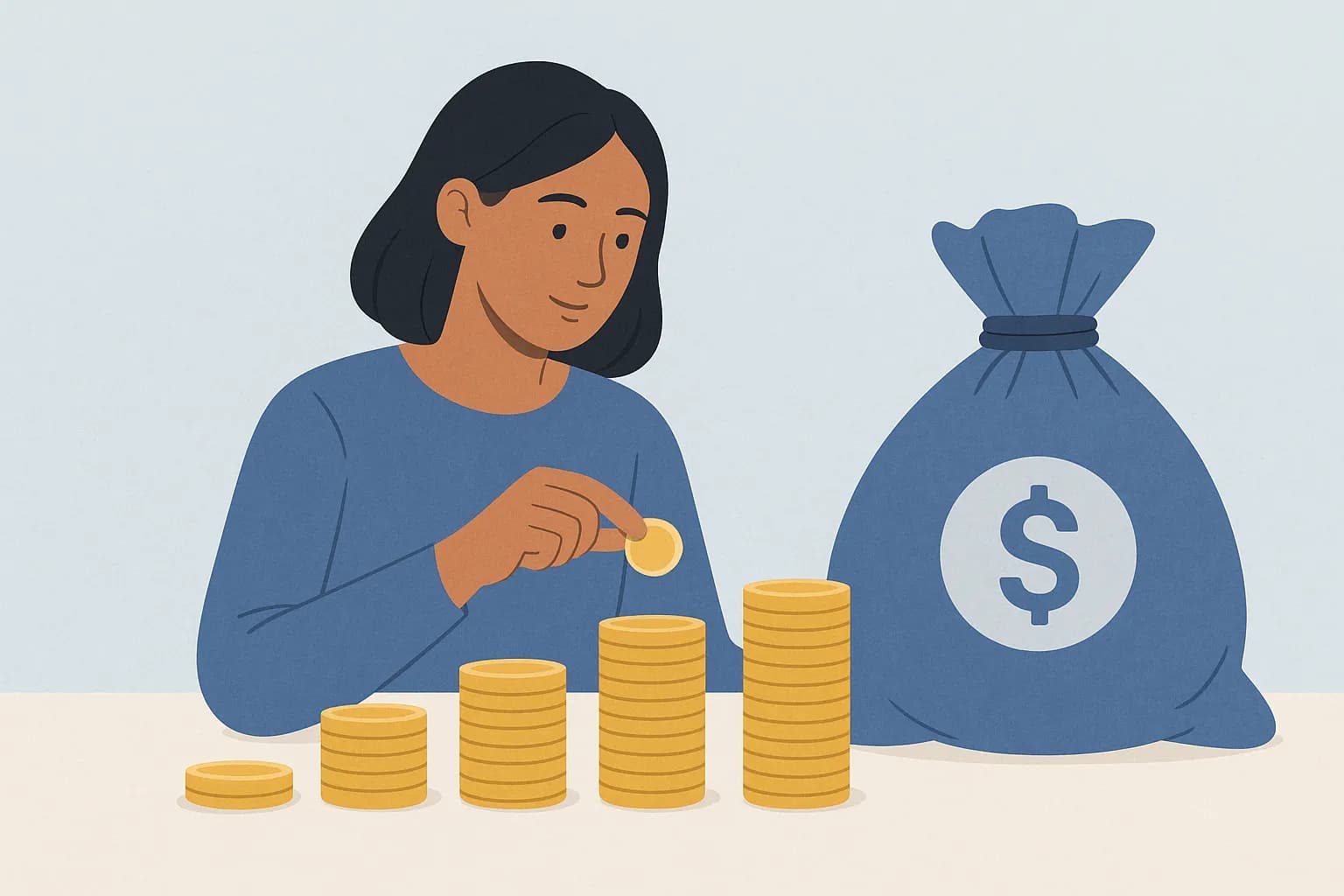
Why start an emergency fund at zero even matters
Because every unplanned expense you can't cover in cash becomes debt, and debt at 25%+ interest is what actually wrecks people's finances long-term, not the emergency itself.
I got an email last year from a reader in Toledo, Ohio, who made $17.50 an hour at a warehouse and had $0.00 saved. Not low savings. Zero. Her car needed a $600 alternator repair and she put it on a store credit card at 29.99% APR. That's the exact scenario an emergency fund exists to prevent, and I want to walk through how she (and you) can build one starting from nothing, even on $30,000 or $35,000 a year.
Here's the thing nobody tells you when you're broke: the first $500 is the hardest money you'll ever save, and also the most valuable. The Federal Reserve's 2023 Survey of Household Economics and Decisionmaking found 37% of Americans couldn't cover a $400 emergency expense with cash on hand. If that's you, you're not a financial failure. You're in the majority. But sitting in that spot is expensive, because every emergency becomes debt, and that debt compounds while you're still trying to pay rent.
What's the actual first goal, $500 or six months of expenses?
Forget six months of expenses for now. Aim for $500 first, then $1,000. That's it.
Forget the old advice that says you need three to six months of expenses before you can breathe easy. That's a goal for later, not a starting line. When you have zero saved, the real first target is $500, then $1,000. Dave Ramsey popularized the $1,000 starter fund decades ago and it still holds up, mostly because it's achievable in weeks, not years, and achievable goals are what actually get finished. I've seen readers hit $1,000 in six weeks and readers take eight months. Both worked. Speed isn't the point. Momentum is.
Where should this money actually live?
A separate high-yield savings account, no debit card attached, at a place like Ally, Marcus, or a local credit union. Not your checking account, and definitely not under your mattress.
Open a separate savings account today, not next week. I mean it. Ally Bank, Marcus by Goldman Sachs, and SoFi all offer online savings accounts paying somewhere around 4% APY as of late 2024, with no minimum balance and no monthly fees. Keep it separate from your checking account on purpose, because an emergency fund sitting next to your debit card gets spent on things that feel urgent but aren't emergencies (concert tickets are not emergencies, no matter how it feels at 11 p.m.). A reader in Sacramento told me moving her fund to a credit union account with no debit card attached cut her 'emergency' withdrawals from twice a month to zero.
How do you find money to save when there's nothing left at the end of the month?
You find $7 to $10 a day hiding in subscriptions, delivery apps, and brand switches. It's not exciting money, it's boring found money, and boring found money is exactly what builds a fund.
You don't need a windfall. You need $7 to $10 a day found somewhere in your existing spending, and I promise it's there. Cancel one subscription you forgot about (the average American pays for 12 subscriptions and actively uses maybe 5, according to a 2023 C+R Research survey). Switch one grocery brand. Skip DoorDash twice a week and put that $24 straight into savings instead of your checking account, where it evaporates. None of this is fun advice. It's not supposed to be exciting. It's supposed to be boring and repeatable, because boring and repeatable is what builds $1,000.
Automation beats willpower every single time
Set up an automatic transfer the morning after payday so you never see the money in checking to begin with. Willpower fails. Automation doesn't.
Automate it or it won't happen, full stop. I don't care how disciplined you think you are, willpower loses to a bad day at work or a friend's birthday dinner nine times out of ten. Set up an automatic transfer of $20 or $25 every payday, timed for the morning after your check hits, before you've had a chance to spend it. Most banks let you schedule this in under five minutes through their app. A reader in Albuquerque set hers for 6 a.m. the day after payday and told me she genuinely forgot the money existed until her fund hit $600.
Use windfalls and side gigs as jumpstarts, not habits
Tax refunds, bonuses, and a weekend of selling stuff on Marketplace can jumpstart your fund fast. Just don't count on them as a long-term strategy.
Windfalls matter more than they seem to on a tight budget, so treat them differently than regular income. Tax refunds average around $3,000 per filer according to IRS data from the 2024 filing season. If you're getting one, I'd put at least half straight into your emergency fund before you touch it. Same with a work bonus, a tax credit like the EITC, or cash gifts at the holidays. It stings to not spend a refund on something fun, I get it, but a $1,500 emergency fund built from a single refund check is a fund that took you zero months of grinding to build.
There's also the side-income route, and I won't pretend it's glamorous. Selling stuff on Facebook Marketplace, driving for Instacart on weekends, doing a few hours of pet sitting through Rover, these aren't career moves, they're bridge moves. One reader in Charlotte sold $340 worth of old electronics and furniture she wasn't using and dropped every dollar into her fund in one week. That's not a strategy you repeat forever. It's a jumpstart, and jumpstarts matter when you're starting from zero.
Don't put emergency cash anywhere risky
Keep it liquid, keep it insured, keep it boring. A high-yield savings account, not a brokerage account or a CD with penalties.
Where you put this money matters more than people assume. Skip the CD, skip the brokerage account, skip anything with a penalty for early withdrawal or market risk attached. This is not investment money. This is oh-no-my-transmission-just-died money, and it needs to be liquid within a day or two, sitting in an FDIC-insured account. High-yield savings accounts are the right tool here, full stop, not a stock index fund, no matter how good the returns look on paper. I've watched people lose emergency cash to a bad market month right when they needed it most, and that's a lesson you don't want to learn the hard way.
What if you're already behind on bills right now?
Get stable first, then save. A free call with a nonprofit credit counselor can matter more than any savings tip in this article if you're currently underwater.
If you're truly underwater right now with collections calls and no slack in the budget at all, a nonprofit credit counselor can help before you try to save a single dollar. The National Foundation for Credit Counseling (nfcc.org) connects you with certified counselors for free budget reviews. I'd rather you spend 45 minutes on a call getting your budget stabilized than try to save $20 a week while a collections agency garnishes your bank account. Stability comes first. Savings comes second. In that order, always.


