Why most people have never actually read their report
Checking your score and reading your report are completely different things. The report is the raw data, and most people skip it entirely. That's a mistake worth fixing today.
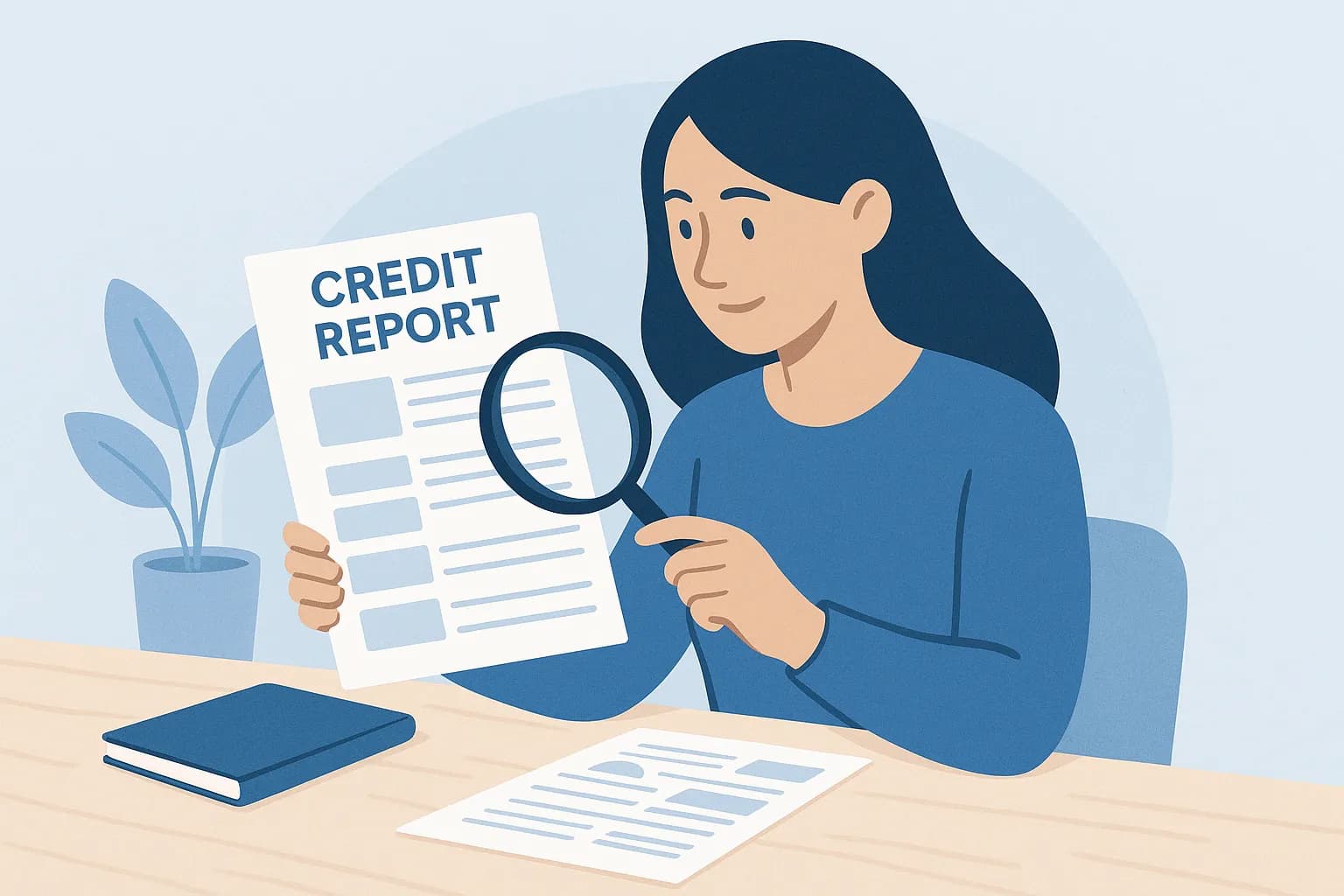
Most people have never actually read their credit report. They've checked their score, maybe, through a bank app or a free service online. But the report itself? That dense, multi-page document with codes and account numbers and dates? It sits unread. Here's the thing: that document is the foundation of your financial identity. Lenders, landlords, insurers, and sometimes employers use it to judge you. If you don't know what's in it, you can't catch errors, and errors are more common than you'd think. The Federal Trade Commission has found that a meaningful share of consumers have at least one error on their credit report that could affect their score. That's not a small problem.
Sound familiar? A lot of people feel a low-grade anxiety about their credit report, like it's a test result they'd rather not see. I get it. But reading it doesn't make things worse. It just shows you what you're working with. And knowledge, even uncomfortable knowledge, is the only way to fix anything.
What the personal information section tells you
This section has your name, address, SSN, and employer history. It doesn't affect your score directly, but errors here can signal identity theft or a mixed file.
Every credit report opens with a personal information section. This is where you'll find your name (including variations and misspellings that creditors have reported), your current and previous addresses, your date of birth, Social Security number (usually partially masked), and your employer information. None of this data directly affects your credit score, but it matters for identity purposes. A name you don't recognize or an address that's never been yours could be a sign of a mixed file, where your report gets blended with someone else's, or worse, identity theft. Check it carefully. It's easy to gloss over this section and assume it's fine.
Employers listed here are pulled from credit applications you've submitted over the years, not from tax records. So an old job you forgot about might still appear. That's normal. What's not normal: a name that's completely different from any variation of yours, or a Social Security number that doesn't match. Those require immediate attention.
The accounts section is the heart of the report
This is where your full credit history lives. Every account, every payment, every late mark. It's the most important section to read carefully.
The accounts section is the heart of the report. This is where every credit card, mortgage, auto loan, student loan, and line of credit gets listed, along with a detailed payment history for each. You'll see the creditor's name, the account number (usually partially masked), the date the account was opened, the credit limit or loan amount, the current balance, and a month-by-month payment history going back years. Payment history coded as 'OK' or '30,' '60,' '90' indicates how many days late a payment was. One 30-day late payment can drop your score noticeably. Two or three 90-day lates can be devastating, and they stay on your report for seven years.
Look closely at accounts you've closed. A closed account can still appear on your report, and the status should say 'closed by consumer' if you closed it, or 'closed by creditor' if the lender shut it down. The latter looks worse to future lenders. Also check the reported balance on closed accounts. It should be zero. If it isn't, that's worth disputing. Small discrepancies matter more than people realize when a lender is running the numbers on a mortgage application.
Hard vs. soft inquiries: what's actually affecting your score
Hard inquiries from credit applications can ding your score a few points each. Soft inquiries (like checking your own report) have zero impact. Unrecognized hard inquiries are a red flag.
The inquiries section divides into two types: hard and soft. Hard inquiries happen when you apply for credit, and they can lower your score by a few points each. Soft inquiries, like when you check your own report or a lender pre-qualifies you, have zero effect on your score. Here's what matters: if you see hard inquiries you don't recognize, that's a red flag. It could mean someone used your information to apply for credit without your knowledge. The CFPB notes that hard inquiries generally stay on your report for two years, though their scoring impact fades after about 12 months.
One thing worth knowing: if you're rate-shopping for a mortgage, auto loan, or student loan, multiple hard inquiries in a short window (typically 14 to 45 days, depending on the scoring model) are usually treated as a single inquiry. So don't let fear of inquiries stop you from comparing lenders. That's one of the few places where the system actually works in your favor.
Public records and collections: the most damaging entries
Bankruptcies and collection accounts are serious negative marks. A bankruptcy can stay on your report for up to 10 years. Even a small unpaid collection can hurt your score for seven.
Public records used to be a big part of credit reports. Bankruptcies, tax liens, civil judgments, all of it showed up. As of 2017, the major bureaus (Equifax, Experian, and TransUnion) removed most tax lien and civil judgment data due to accuracy concerns. Today, only bankruptcies typically appear in this section. A Chapter 7 bankruptcy stays on your report for 10 years; a Chapter 13 stays for seven. If you've never filed for bankruptcy and this section isn't empty, dispute it immediately. That's an error with serious consequences.
The collections section shows debts that a creditor has given up on collecting and sold to a third-party collection agency. A collection account is a major negative mark. It tells lenders that you defaulted on a debt badly enough that the original creditor wrote it off. Even a single collection from a $50 medical bill can drag your score down. Some newer scoring models (like FICO 9 and VantageScore 4.0) ignore paid collections, which is good news. But many lenders still use older models. Knowing what's in collections, and whether those accounts are accurate, is worth every minute of your time.
How to spot errors and what to do about them
Errors fall into identity mistakes, account inaccuracies, and outright fraud. You have the legal right to dispute all of them, and the bureaus are required to investigate within 30 days.
Spotting errors is the whole reason to read your report carefully. Errors fall into a few categories: identity errors (wrong name, wrong address), account errors (a closed account listed as open, a balance shown incorrectly, a payment marked late when it wasn't), and fraudulent accounts (accounts you never opened). The dispute process is straightforward in theory: you contact the bureau, submit your evidence, and they're required to investigate within 30 days under the Fair Credit Reporting Act. In practice, it takes follow-up. I'd keep copies of everything you send. Disputes submitted online leave a digital trail, which can be helpful if you need to escalate.
To be blunt: disputing an error won't hurt your credit. It's your legal right under the FCRA, and there's no penalty for exercising it. If a bureau removes an error and it later reappears (this happens), you can file again and also escalate to the CFPB. Document everything. The paper trail matters.
Where to get your free report (and how often)
AnnualCreditReport.com is the only federally authorized source. You can now access all three bureau reports weekly for free. Pull all three; they're not identical.
To get your free reports, go to AnnualCreditReport.com, which is the only federally authorized source. You're entitled to one free report from each of the three major bureaus every 12 months, and as of recent policy updates, you can access them weekly. Pull all three. They're not identical, because not every creditor reports to all three bureaus. A late payment might show on Experian but not Equifax. An account might appear on TransUnion that's missing from the others. Comparing all three gives you the full picture.
Honestly, pulling all three at once once a year, then staggering checks through the year, is a reasonable habit. If you've recently applied for a mortgage or experienced a data breach, go ahead and pull all three right now. Don't wait for the annual cycle. The weekly access policy exists for a reason.
Your next steps: build a monitoring habit
Reading your report once is a start. The real value comes from checking regularly and setting up alerts so you catch problems early. Treat it like a financial vital sign.
Once you've read your reports and caught any errors, the next step is building a monitoring habit. This doesn't mean obsessing over your score daily. It means checking your full report two or three times a year and setting up alerts through your bank or a free monitoring service for unusual activity. One hard inquiry you don't recognize, one new account you didn't open, these are the early warning signs of identity theft. Catching them fast limits the damage. Your credit report isn't a one-time document to read and forget. Think of it as a financial vital sign worth checking regularly.
Start this week. Go to AnnualCreditReport.com, pull your report from one bureau, and spend 20 minutes reading it section by section. Note anything that looks wrong. Write it down. Then pull the next one. It's not glamorous work, but it's the kind of thing that saves you real money when you apply for a car loan or a mortgage and don't get blindsided by a problem you could have fixed months earlier.