Can you really gain 100+ points, or is that marketing hype?
Yes, it's real, but it's not overnight and it's not passive. I've watched it happen for readers whose scores were being dragged down by fixable stuff: errors, high balances, one bad collection.
I got a message last spring from a reader in Tulsa named Marcus. His score was 587. He'd just gotten denied for an apartment and was furious, embarrassed, and honestly a little panicked. Fourteen months later he texted me a screenshot: 706. That's not luck. That's not a credit repair company waving a magic wand for $99 a month. That's four specific moves, done in the right order, tracked obsessively. This article is that playbook.
Let's be honest about something first. Anyone who promises you 100 points in 30 days with zero effort is selling you something, and it's usually a scam. The FTC has been cracking down on credit repair outfits for years precisely because of this kind of promise. But 100 points in 6 to 18 months? That's realistic for a lot of people, especially if your score is being dragged down by fixable stuff like errors, high utilization, or a couple of old collections you didn't even know about.
Attack your credit utilization first, it moves the fastest
Utilization is the fastest lever you have. Get your balances under 30% of your limits (ideally under 10%) and you can see real movement in a single billing cycle.
The single fastest lever most people ignore is credit utilization, meaning how much of your available credit you're actually using. FICO and VantageScore both weight this heavily, right behind payment history. If you've got a $10,000 limit across your cards and you're carrying $6,500 in balances, you're at 65% utilization, and that's crushing your score regardless of how perfectly you pay on time. Get that under 30%, and ideally under 10%, and I've watched scores jump 40, 60, even 80 points within a single statement cycle. No new accounts. No waiting years. Just math.
Here's how you actually pull utilization down fast, assuming you can't just pay off everything tomorrow (most people can't, let's be real). Pay down the highest-utilization card first, not the highest balance. A card at 90% utilization with a $2,000 limit is hurting you more than a card at 20% utilization with a $15,000 limit, even if the second one has a bigger dollar balance. Also, ask your issuer for a credit limit increase. Chase, Capital One, and Discover will often do a soft-pull increase online in about 90 seconds. Doubling your limit from $5,000 to $10,000 without spending another dime cuts your utilization in half instantly.
Check your credit reports for errors, they're more common than you'd think
Roughly one in five people have a real error on their credit report. Pull all three reports free and dispute anything wrong; I've seen 40+ point jumps from a single bad collection getting removed.
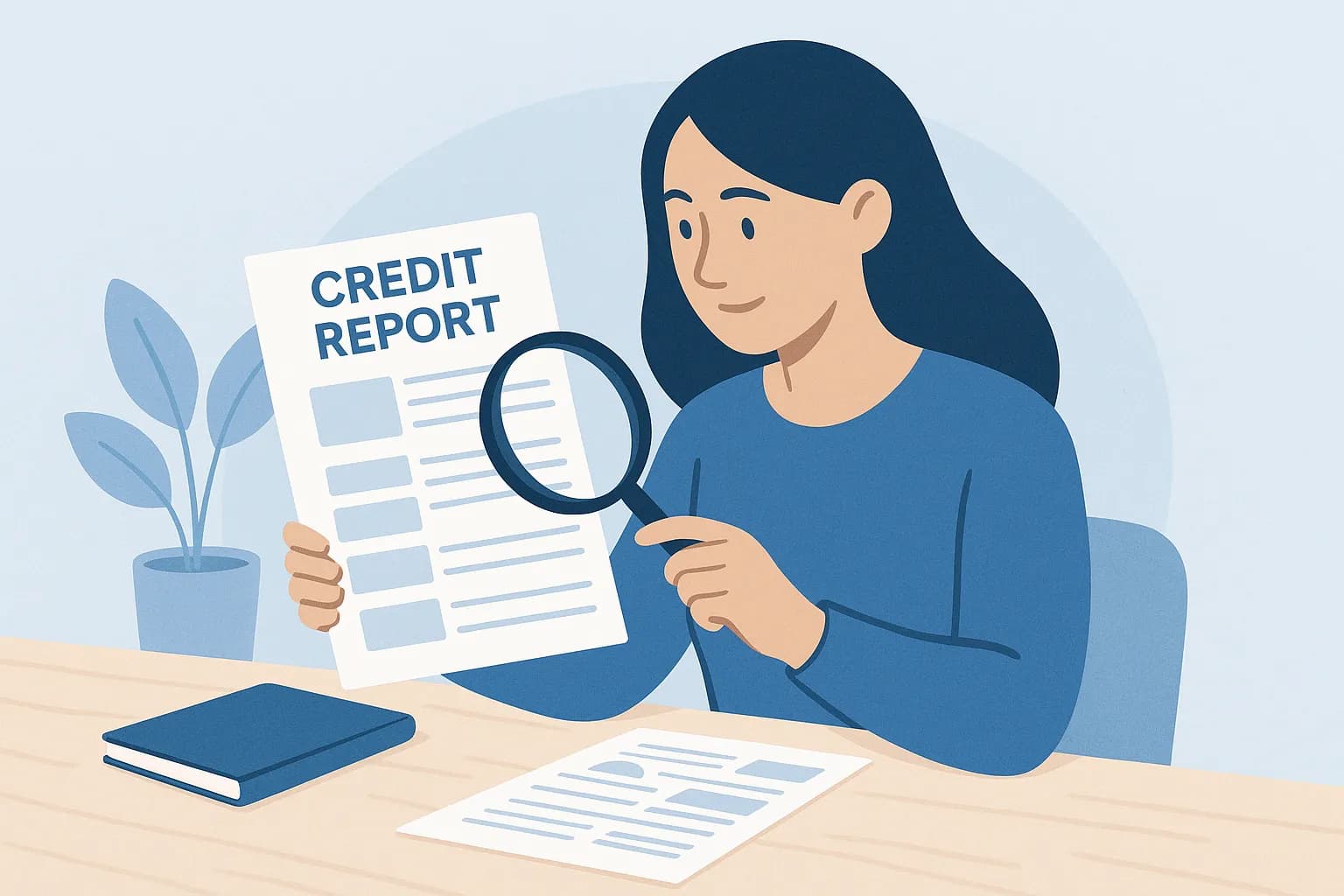
Credit report errors are the quiet score killer nobody checks for until it's too late. A 2021 study from the Federal Trade Commission found roughly one in five consumers had an error on at least one of their three credit reports significant enough to affect their score. I'm talking accounts that aren't yours, collections reported twice, old debts with the wrong balance, even accounts listed as late when you paid on time. Pull all three reports free at AnnualCreditReport.com (that's the only site backed by federal law, ignore the ones that make you enter a credit card). Dispute anything wrong directly with Equifax, Experian, and TransUnion online. It typically takes 30 days, and I've seen scores climb 40+ points from a single collection account getting removed because it was actually someone else's debt.
Should you become an authorized user on someone else's card?
It can work, and work fast, but only if the primary cardholder's account is genuinely clean. Piggybacking on a maxed-out or delinquent card will drag you down instead.
Now, the piggybacking trick, and I want to be careful here because people misuse this. Becoming an authorized user on a family member's credit card, one with a long history and low utilization, can genuinely help. If your mom has had a Citi card open since 2004 with a $500 balance on a $12,000 limit and never missed a payment, adding you as an authorized user can import that entire history onto your report within a month or two. I've seen this add 20 to 50 points almost overnight for someone with thin credit. But it only works if the issuer reports authorized users to the bureaus (most do, but call and confirm). And don't do this with a card that's maxed out or has late payments. That'll drag you down instead.
Don't just pay off collections, negotiate first
Paying a collection helps a little under newer scoring models, but negotiating a pay-for-delete agreement before you pay helps a lot more. Get it in writing every time.
Collections and old debts deserve their own conversation because this is where I see the most confusion. If you have a collection account, don't just pay it off assuming that fixes everything. Under the newer FICO 9 and FICO 10 scoring models, and under VantageScore 4.0, paid collections are weighted less harshly than unpaid ones, and medical collections under $500 are often excluded entirely now (a change that came out of pressure following a 2022 agreement among the three major bureaus). Before you pay anything, try negotiating a pay-for-delete letter, where the collector agrees in writing to remove the account entirely once paid. Not every collector will agree. But I've had readers get $1,800 medical bills wiped clean off their report this way for a $600 settlement.
What if your score is below 600 with thin or damaged credit?
Secured cards and Experian Boost are your on-ramp. Neither is glamorous, but both build real, reportable history fast, and one of them is free.
So what do you do if your score is below 600 and you don't have thin, recoverable errors, just genuinely thin or damaged credit? Secured credit cards are your friend here, and I know they feel like a step backward. They're not. A $200 deposit with a card like the Discover it Secured or Capital One Platinum Secured builds real payment history over 6 to 12 months, and most issuers will graduate you to an unsecured card automatically once you've shown good behavior. Pair that with something like Experian Boost, which lets your on-time phone, utility, and streaming payments count toward your score. It's free, takes about 10 minutes, and I've seen it add 10 to 15 points for people with limited credit history.
Timing your payments matters more than you'd guess
Your balance gets reported on your statement closing date, not your due date. Pay down your card before it closes, not just before it's due, and your utilization will look far better on paper.
Timing matters more than people think. Your utilization is measured at whatever moment the card issuer reports your balance to the bureaus, usually your statement closing date, not your due date. So if you charge $3,000 on a $5,000 limit card and pay it off in full by the due date, your score can still tank in the meantime because the bureaus saw that 60% utilization snapshot before your payment posted. The fix is simple once you know it: pay your balance down before the statement closes, not just before it's due. I make my own payments about five days before each statement date, and it's kept my utilization reporting under 5% every single month for years.
Next steps: build your 90-day action plan
Don't try to do everything at once. Pull your reports this week, dispute errors, attack your worst-utilization card, and leave your old accounts open. Small, sequenced moves beat one big overhaul every time.
One more thing nobody wants to hear: closing old credit cards usually hurts more than it helps, even ones you never use. Length of credit history and total available credit both matter to your score. I get emails constantly from readers who closed a card they'd had for eight years because they felt guilty not using it, then watched their score drop 20 points the next cycle. If the card has no annual fee, just leave it open. Throw a small recurring charge on it (a streaming subscription, gas) and set autopay so it stays active without you thinking about it.
So here's your actual to-do list, in order. Week one: pull all three reports at AnnualCreditReport.com and flag every error. Week two: file disputes and call one issuer about a limit increase. Week three: sign up for Experian Boost and check whether a family member will add you as an authorized user. Then, every month after, pay your cards down before the statement closes, not just before the due date. Marcus didn't do anything exotic. He just did these five things, in order, and didn't quit after month two when nothing had moved yet. That's the part most people skip.