Medical bills are negotiable. Here's why that matters.
Almost no one pays the full sticker price on a hospital bill, and the system is designed with that in mind. Your leverage starts the moment you receive a statement, not after you've already paid.
Medical bills can blindside you. One hospitalization, one surprise surgical fee, and suddenly you're staring at a statement for $15,000 that your insurance only partially covered. The financial shock is real, and the emotional weight is heavy. Here's the thing: that bill is almost never the final word. Hospitals and healthcare providers negotiate far more often than they advertise, and knowing how to ask is half the battle. The Consumer Financial Protection Bureau (CFPB) has documented widespread billing errors in medical statements, which means your first job is simply to verify that what you owe is actually what you owe.
Always request an itemized bill before paying anything
The summary statement your provider sends is not enough detail to spot errors. Get the full itemized bill, review every line, and dispute anything that doesn't match your actual care.
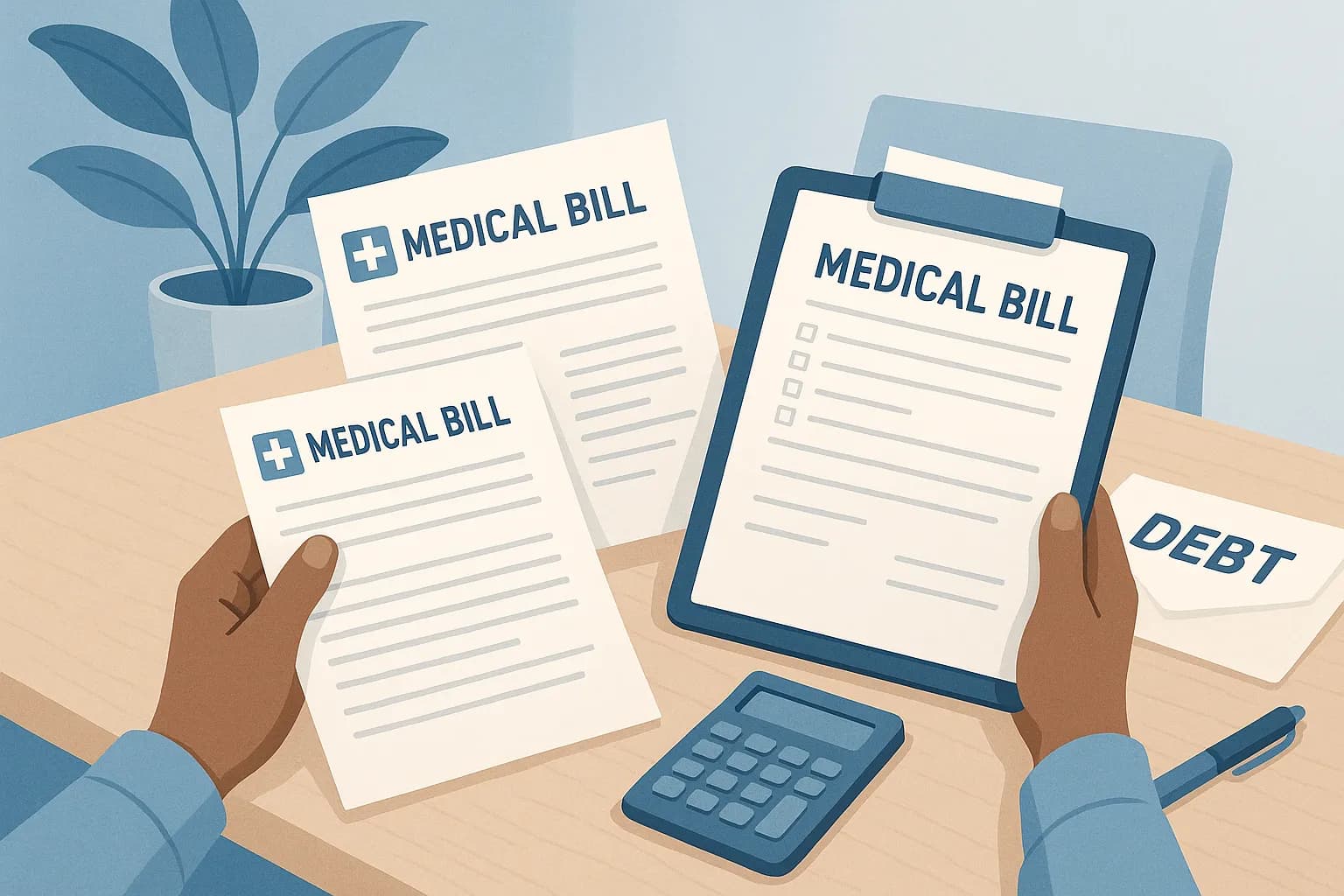
Before you pay a single dollar, request an itemized bill. Not the summary statement, the full itemized version. Federal law entitles you to this. You're looking for duplicate charges, services marked as provided that weren't, or items billed at the wrong code. A charge for 'room and board' that spans more days than you were admitted is a classic error. So is a charge for a procedure that was included in a package price elsewhere on the same bill. Billing errors are common enough that patient advocates and hospital billing departments treat them as routine. Review every line with fresh eyes and a skeptical mindset.
Appeal your insurance denial before you negotiate with the hospital
Insurers deny claims in error more than most people realize. An appeal is free, and overturning one denial can eliminate thousands of dollars from your balance overnight.
Once you've confirmed the charges are correct, or disputed the ones that aren't, it's time to understand what your insurance actually covers. Call your insurer before disputing a hospital charge. Ask specifically whether every line item was processed correctly under your plan, whether any services were denied that should have been covered, and whether an appeal is available for any denied claims. Insurers deny claims in error more often than most people realize. An appeal costs you nothing but time, and overturned denials can eliminate thousands of dollars from your balance. I'd always appeal before negotiating with the provider.
Charity care and financial assistance programs can erase the bill entirely
Hospitals that receive federal funding are legally required to offer financial assistance. You don't have to be in poverty to qualify, and the application is simpler than most people assume.
Here's a number worth knowing: hospitals that receive federal funding are required under the Affordable Care Act to have financial assistance programs, commonly called charity care. Eligibility typically scales with income, often covering patients earning up to 200-400% of the federal poverty level. If your household income is modest relative to the bill, you may qualify for a substantial reduction or even full forgiveness, and you don't have to be destitute to ask. The application process usually involves submitting recent pay stubs or tax returns. It's paperwork, but the payoff can be enormous. Ask for the financial assistance application before you negotiate anything else.
How to negotiate directly with the billing department
Ask for a financial counselor, request the self-pay discount, and make a specific lump-sum offer if you can. Vague requests get vague results. Be concrete and document everything.
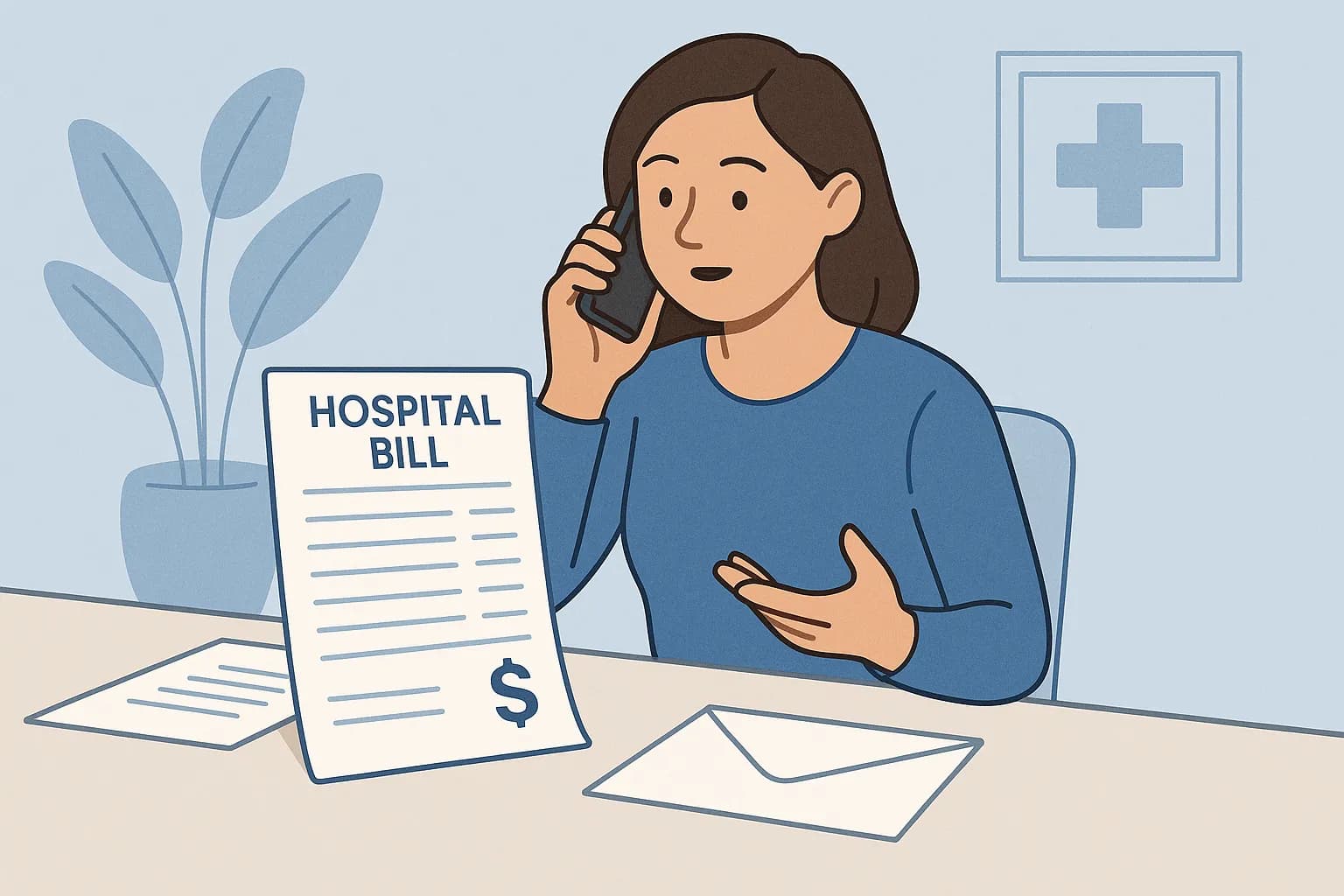
When you're ready to negotiate directly, contact the hospital's billing department and ask to speak with a financial counselor, not just a billing representative. State clearly that you want to settle the account and ask what options are available. Two levers work well here. First, ask about the hospital's self-pay discount. Hospitals frequently bill uninsured patients at a 'chargemaster' rate, which is an inflated list price that nobody actually pays. Asking for the cash-pay or self-pay rate can reduce the bill by 30-50% in some cases. Second, if you can make a lump-sum payment, offer a specific number below what you owe. A $4,000 settlement offer on a $6,000 bill is a real negotiation, not an insult.
Payment plans are often interest-free. Use them wisely.
Hospital payment plans frequently carry no interest at all, making them one of the best financing deals available. Never put medical debt on a high-rate credit card when a zero-percent plan is on the table.
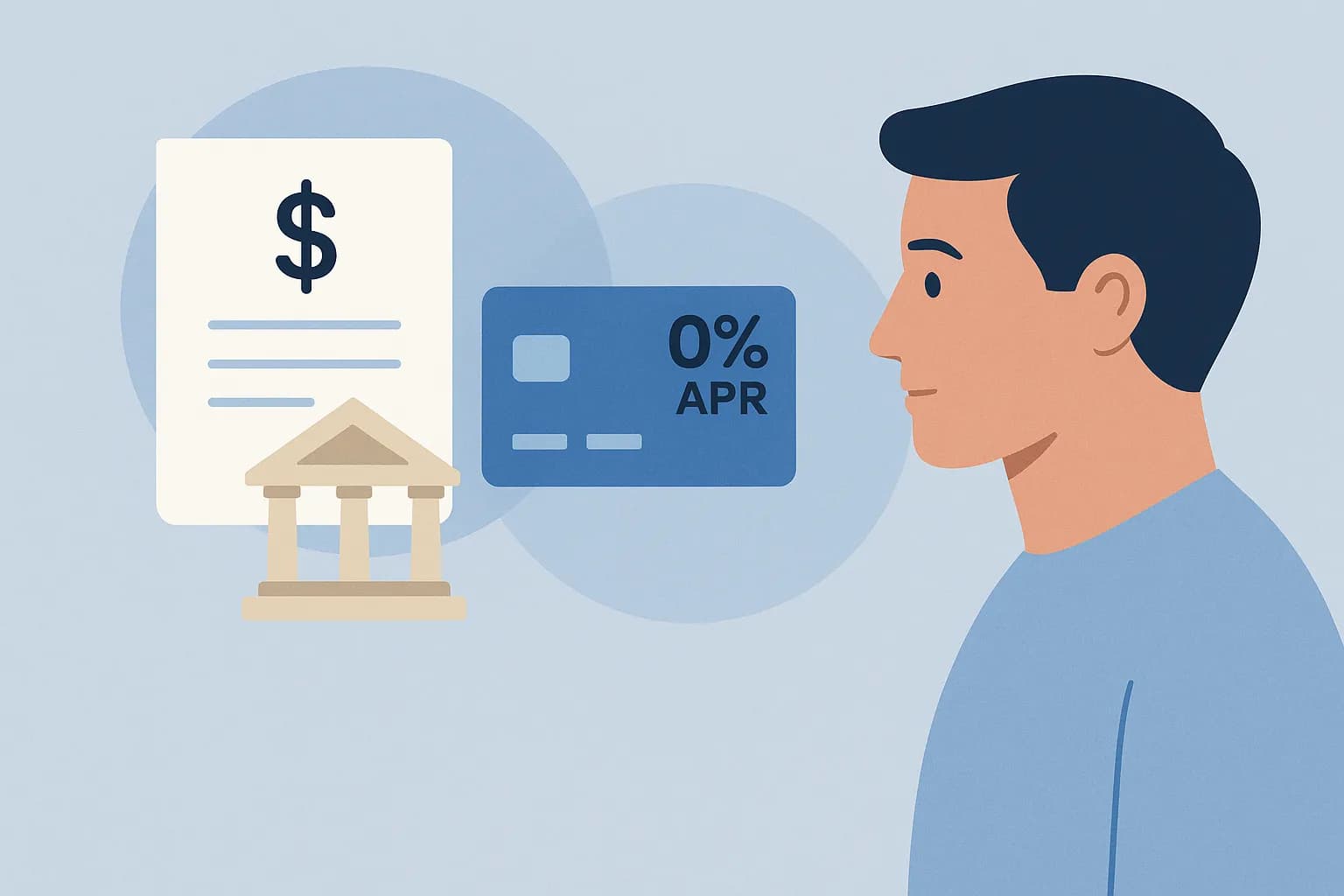
Payment plans are the other major tool, and most providers offer them. Here's what most people don't know: hospital payment plans are frequently interest-free. That is a genuinely good deal. A $10,000 balance spread over 24 months at zero percent interest costs you $416 per month with no additional cost. Compare that to putting it on a credit card at 22% APR, where the same balance would cost you considerably more over time and damage your financial flexibility. If a hospital offers a payment plan, get the terms in writing, confirm there's no interest, and ask whether making payments affects any pending collections activity.
Medical billing advocates can negotiate for you
If the bill is large or the situation is complex, a professional advocate or nonprofit credit counselor can negotiate on your behalf, often for a share of what they save you. It's worth looking into.
Medical billing advocates and patient advocates are a resource many people overlook. These professionals, sometimes called medical billing advocates or patient advocates, review your bills for errors, negotiate on your behalf, and often work on a contingency basis, taking a percentage of what they save you. For large, complex bills, the savings can far exceed their fee. Nonprofit credit counseling agencies, including those affiliated with the National Foundation for Credit Counseling (NFCC), can also help you build a plan for managing medical debt within your broader financial picture. You don't have to tackle this alone.
What to do if the bill has already gone to collections
You still have rights and leverage even with a collections account. Respond within 30 days to preserve your dispute rights, and know that collectors often settle for less than the full balance.
Timing matters more than most people think. The best window to negotiate is before a bill goes to collections, ideally within the first 30 to 90 days after receiving it. Once a provider sells your debt to a collections agency, your leverage shrinks and the stress multiplies. That said, you can still negotiate with collectors. The Fair Debt Collection Practices Act (FDCPA) gives you the right to request debt validation in writing, and collectors are often willing to settle for less than the face value of the debt, especially on older accounts. If you receive a collections notice, respond in writing within 30 days to preserve your dispute rights.
One important note on medical debt and credit: the three major credit bureaus, Equifax, Experian, and TransUnion, made significant changes to how they report medical debt starting in 2022 and 2023, including removing paid medical debt from credit reports and raising the threshold for unpaid medical debt that appears on reports. The CFPB has continued to push for further protections. This doesn't mean medical debt is consequence-free, but it does mean the credit damage from a medical bill may be less severe than it would have been a few years ago. Still, unresolved medical debt can affect your ability to qualify for loans, so addressing it proactively remains the right move.
Your next steps: start today, not next week
Pull out the bill, request the itemized version, call your insurer, and contact the billing department. Three concrete actions, done this week, can genuinely change your outcome.
Start today, not next week. Pull out the most recent bill, call and request the itemized version if you don't have it, and block two hours to review it carefully. Then call your insurer. Then call the provider's financial counseling office. These three steps alone can meaningfully change your outcome. Medical debt feels overwhelming precisely because the system is opaque and the numbers are large. But the negotiation process is learnable, the hospitals are motivated to collect something rather than nothing, and you have more leverage than the bill implies. Take it one step at a time, document everything in writing, and don't let embarrassment or anxiety stop you from asking for what the system already makes available.