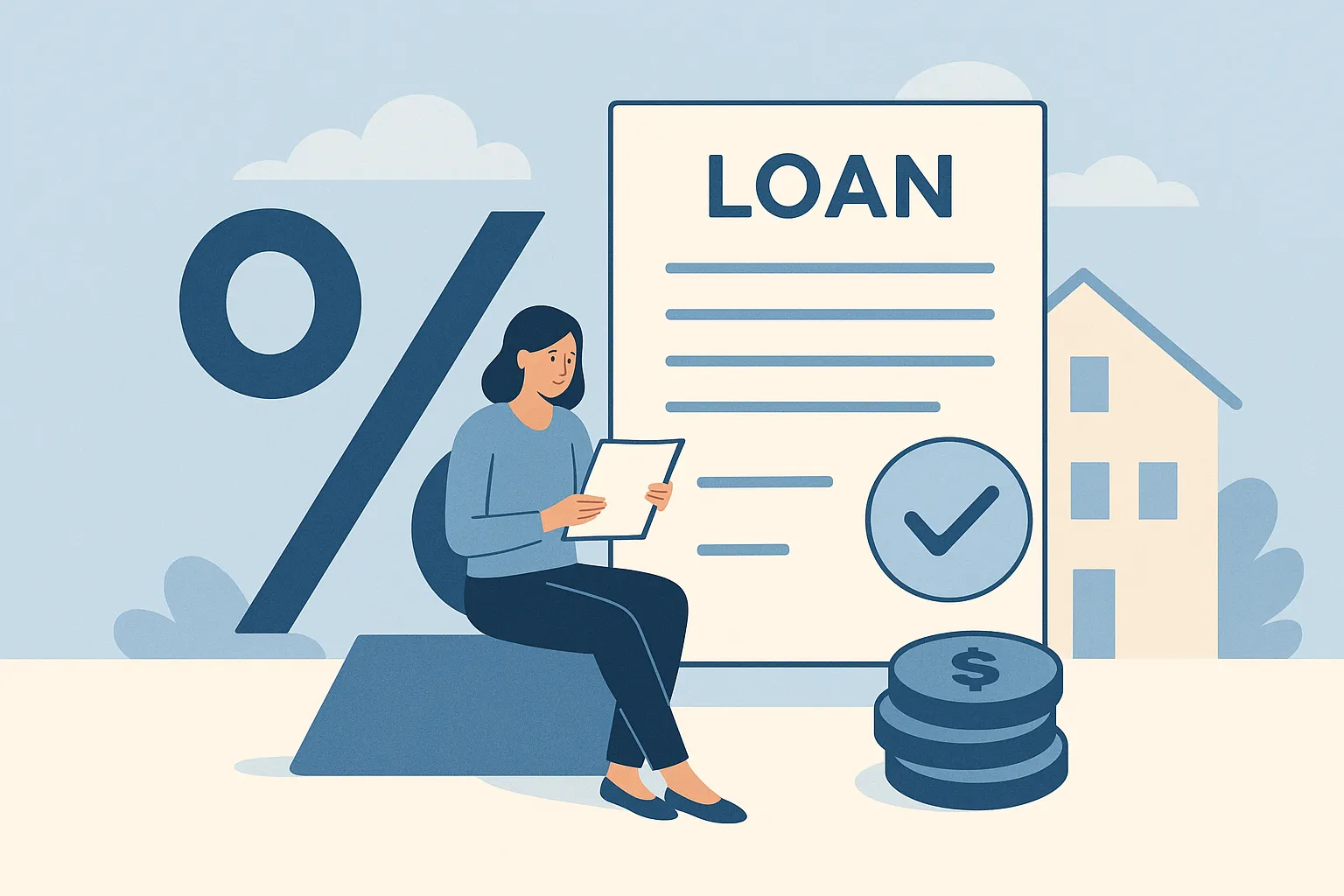
Why does one lender quote 9% and another quote 28% for the same loan?
It's not random. Lenders price personal loans based on your credit score, debt load, and loan term, and the spread between offers can be enormous. I've seen the exact same borrower get quotes ranging by 15 percentage points in the same week.
I still remember a call I got from a friend in Tucson last spring. She'd just been approved for a personal loan to consolidate three credit cards, and she was thrilled about the monthly payment. What she hadn't noticed was the APR: 28.9%. That's higher than most of the cards she was trying to pay off. Sound familiar? This happens constantly. People shop for a payment they can afford without ever looking hard at the rate driving that payment, and it can cost thousands of dollars over the life of the loan.
Here's the thing about personal loan interest rates in 2025: they're all over the map. According to Federal Reserve data, average rates on 24-month personal loans have hovered between 11% and 12.5% this year, but that average hides a huge spread. Someone with a 780 credit score might land a rate around 7% or 8% from a credit union. Someone with a 620 score could be looking at 25%, 30%, even up to 36% from an online lender. The gap isn't small. It's the difference between paying $600 in interest on a $10,000 loan and paying $4,500.
What actually determines your personal loan rate?
Credit score gets top billing, but debt-to-income ratio and loan term move the needle just as much. I've watched people with great credit get mediocre offers because their existing debt load scared the lender.
So what actually sets your rate? Lenders look at a handful of core factors, and credit score sits at the top. But it's not the only thing. Your debt-to-income ratio matters a lot, sometimes more than people expect. I've seen borrowers with excellent credit get mediocre offers because 45% of their income was already going toward existing debt. Loan term matters too. A 36-month loan almost always carries a lower rate than a 60-month loan, because the lender is taking on less risk over a shorter window. Loan amount, your employment history, and even which lender you choose (bank versus credit union versus online) all shift the number you're quoted.
Interest rate vs. APR: why the difference costs people real money
The interest rate is just the cost of the money. The APR includes fees, and that gap is where people get quietly overcharged. Always compare APRs, never the advertised rate alone.
Let's talk about APR versus interest rate, because I think this is the single most misunderstood part of borrowing money. The interest rate is just the cost of borrowing the principal, expressed as a percentage. The APR, or annual percentage rate, wraps in the interest rate plus fees, most commonly an origination fee. A lender might advertise a 9.99% interest rate, but if there's a 5% origination fee tacked on, your real APR could be closer to 12.5% or 13%. I always tell people: compare APRs, not advertised rates. Anything else is comparing apples to a fruit basket.
Origination fees deserve their own conversation, honestly, because they quietly do a lot of damage. These fees typically run from 1% to 8% of the loan amount, and lenders usually deduct them straight from your loan proceeds before the money ever hits your account. Borrow $15,000 with a 6% origination fee, and you actually receive $14,100, while still owing the full $15,000 plus interest. SoFi, LightStream, and several credit unions skip origination fees entirely for well-qualified borrowers. Upstart and some subprime-focused lenders lean on them more heavily. If two lenders quote similar interest rates, the one with no origination fee almost always wins.
Fixed vs. variable rate: which should you pick?
Go fixed. I'd say this to any friend asking. Variable rates can look cheaper upfront, but I've watched people get burned when rates climbed mid-loan.
Fixed or variable? I'll be blunt: go fixed. Almost every personal loan I'd recommend to a friend is fixed-rate, and for good reason. Variable rates track an index (often tied to the prime rate or SOFR) and can climb during your repayment term. A friend of mine in Columbus took a variable-rate loan back in 2022 assuming rates would stay calm. They didn't. His payment jumped by almost $80 a month within eighteen months as the Fed kept hiking. Fixed-rate personal loans lock in predictability. You know exactly what you'll pay in month one and month sixty. For a debt that already stresses people out, that certainty is worth a lot.
What rate can you actually expect based on your credit score?
Here's the honest breakdown by credit band, so you're not walking in blind. If your score is under 600, I'd pause before signing anything at 30%-plus.
Credit score bands tell a pretty clear story, and it's worth seeing the actual numbers laid out. Borrowers with scores above 760 are typically looking at rates in the 7% to 12% range depending on the lender and term. Scores between 690 and 759 usually land somewhere in the 12% to 18% range. Drop into the 630 to 689 band, and rates commonly run 18% to 28%. Below 630, you're often looking at 28% up to the 36% cap that most reputable lenders won't exceed (some states cap rates lower, and the Military Lending Act caps rates at 36% for active-duty service members and their families). If your score sits below 600, a personal loan might still be available, but I'd pump the brakes and ask whether a secured option or a credit builder loan makes more sense first.
Should you just take your bank's offer?
No. Shop around, always. Credit unions in particular tend to beat big banks on personal loan pricing, and one reader saved over four grand just by comparing four quotes.
I want to push back on something I hear a lot: 'my bank will give me the best rate because I've been a customer for ten years.' Sometimes, sure. Often, no. A reader in Denver I worked with saved $4,200 over five years by getting quotes from four lenders instead of automatically going with her bank of fifteen years. Credit unions in particular tend to undercut big banks on personal loan rates because they're member-owned and not chasing shareholder profit. Navy Federal, Alliant, and PenFed regularly post rates a point or two below the national average for qualified members. Online lenders like LightStream and SoFi can also be competitive, especially for borrowers with strong credit and steady income. Shop at least three or four places. It takes an afternoon, and it can save you real money.
Won't shopping around wreck my credit score?
Not if you do it right. Use prequalification tools with soft pulls, and bundle your hard-pull applications into a two-week window so they count as one inquiry for scoring purposes.
One more thing that trips people up: prequalification versus a hard credit pull. Most major lenders now let you check estimated rates through a soft credit check that doesn't ding your score. Bankrate, LendingTree, and individual lender sites all offer this. Use it. Run your numbers through four or five lenders in the same week, since multiple personal loan inquiries within a short window (usually 14 to 45 days depending on the scoring model) get bundled together for scoring purposes, minimizing the hit to your credit. I've watched people avoid rate shopping because they were scared of hurting their score, and honestly, that fear costs them more than the tiny, temporary dip ever would.
Your next move if you're shopping for a personal loan right now
Know your score, get at least three quotes, and compare APR line by line. If the offers you're getting are ugly, sometimes waiting six months to improve your credit is the smarter play.
So where does this leave you if you're actually shopping for a loan right now? Start by pulling your free credit report and know your actual score before you apply anywhere; guessing wastes time and can lead to applying at lenders that were never going to approve you at a decent rate. Get prequalified estimates from at least three lenders, a mix of a credit union, a bank, and an online lender. Compare APR, not just the sticker interest rate, and read the fee disclosure line by line. If your debt-to-income ratio is high, consider paying down one credit card first, even a modest $1,500 payment can shift you into a better pricing tier. And if every offer you're getting looks brutal, that's useful information too. Sometimes the smartest move is to wait six months, build your score, and apply again.