Why does almost nobody actually understand their pay stub?
Nobody sits us down and teaches this. Schools skip it, most employers just email a PDF and assume you'll figure it out, and honestly, most of us never do until something goes wrong.
I was 24 the first time someone actually explained my pay stub to me, and it wasn't a teacher or my employer. It was a coworker at a marketing agency in Austin who noticed I was budgeting off my gross salary instead of my net pay. I'd been telling myself I made $52,000 a year, which sounded great, but I was planning my rent and car payment around a number I'd never actually see in my checking account. Sound familiar?
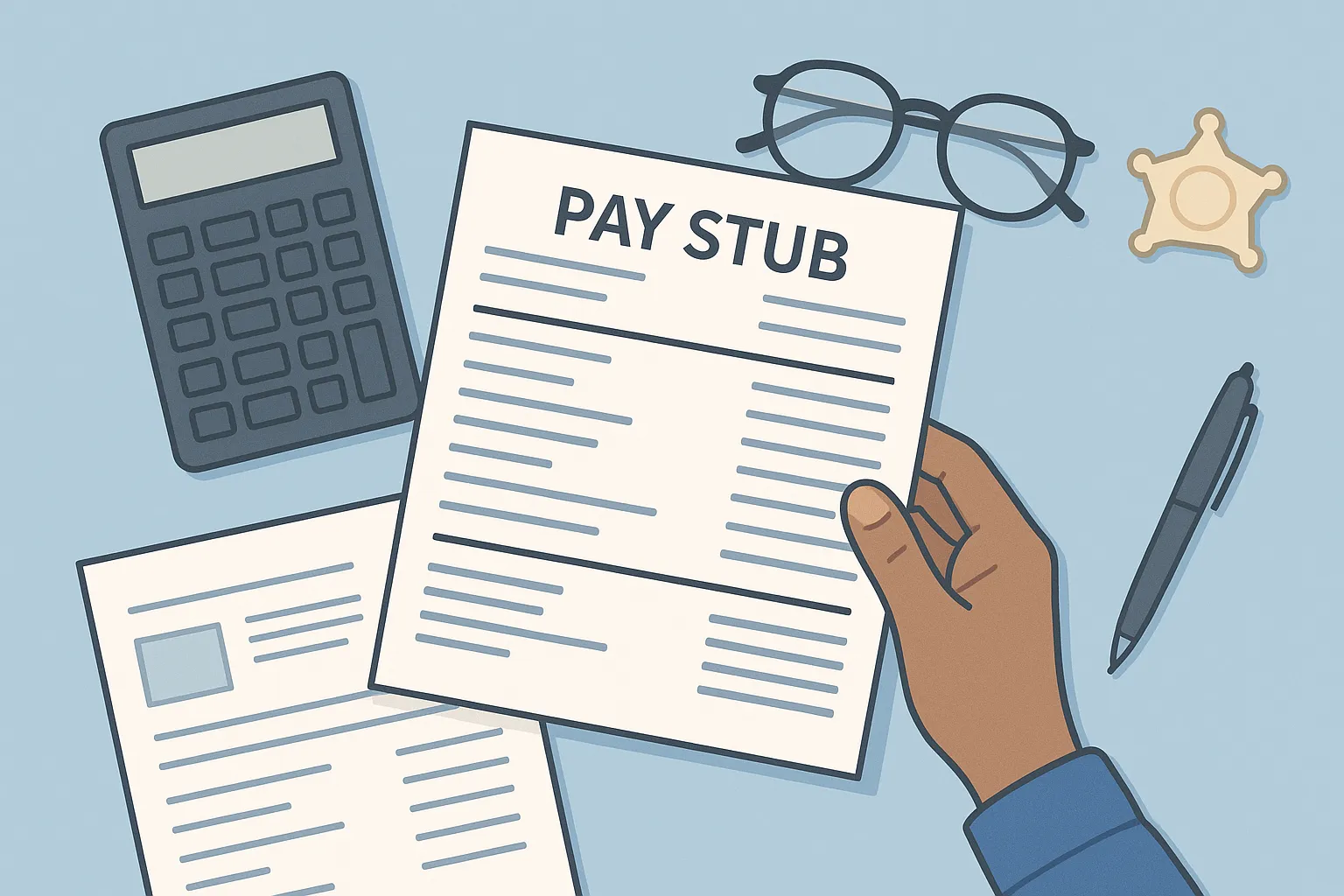
Here's the thing. Pay stubs look like a wall of abbreviations designed to confuse you. FICA, YTD, FIT, SIT, SUTA. Nobody hands you a glossary. And most people, understandably, glance at the net pay number, feel either relieved or disappointed, and move on. I get it. But that habit costs people money, sometimes for years, in the form of payroll errors nobody catches or benefits nobody realizes they're paying for.
Gross pay vs. net pay: the number that actually matters for your budget
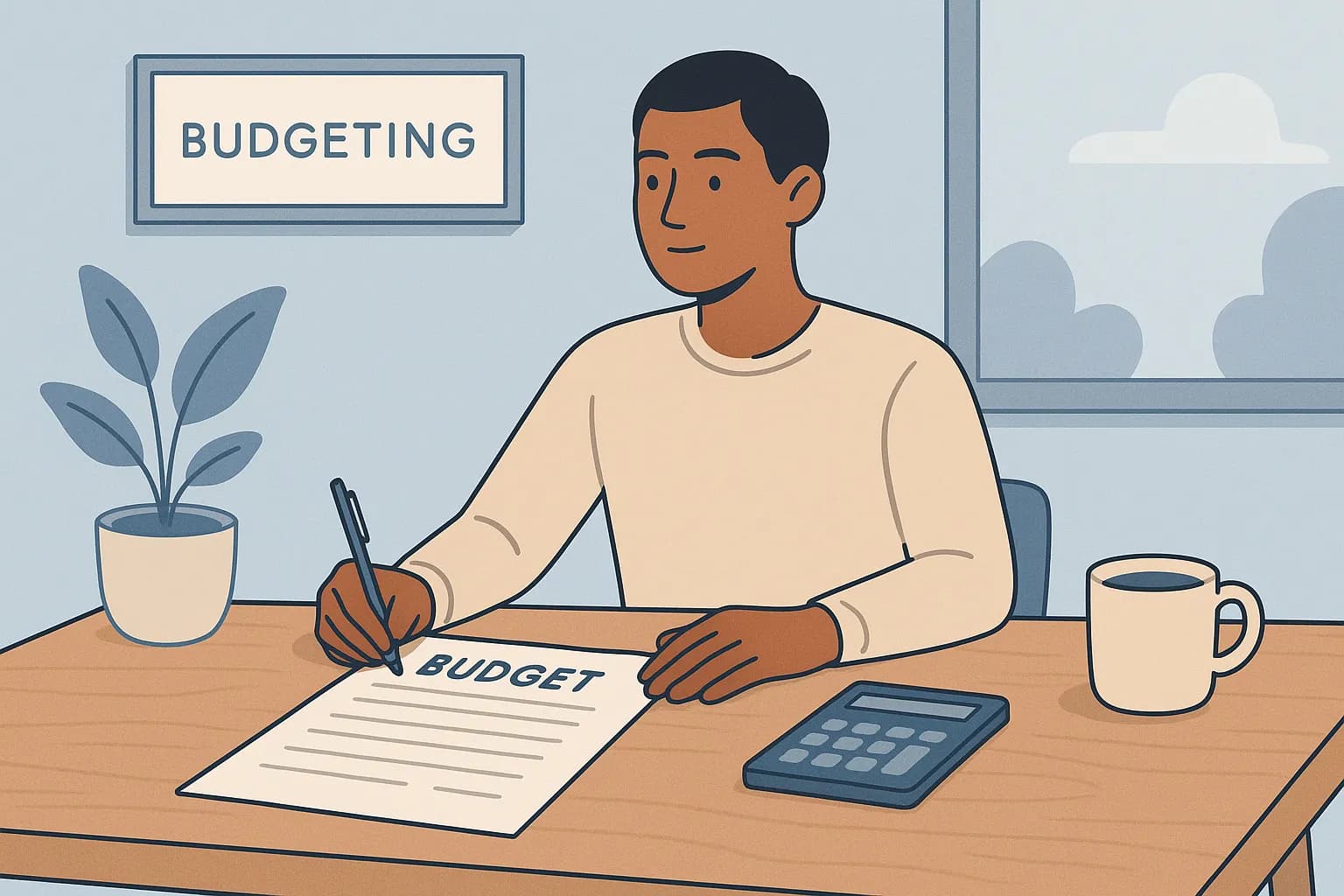
Gross pay is your salary before anything gets touched. Net pay is what actually hits your bank account, and it's the only number that should show up in your budget.
Gross pay sits at the top of your stub, usually the biggest number on the page, and it's almost always wrong to budget around it. Say you earn $65,000 a year, paid biweekly. That's roughly $2,500 gross per paycheck. But after federal income tax, FICA, state tax (if your state has one), and maybe a health insurance premium, your net pay might land around $1,850 to $1,950. That's a gap of $550 to $650 per paycheck, which adds up to $14,000 to $17,000 a year that never touches your checking account.
I've sat across the table from clients who built entire budgets, including a car loan and an apartment lease, around gross salary. It's a rough conversation when the math doesn't work three months in. Net pay, also called take-home pay, is the only figure that should drive your spending plan. Full stop. If your budgeting app or spreadsheet has your salary listed anywhere near the top, go fix that today.
What is FICA, and why does it take a chunk out of every single check?
FICA funds Social Security and Medicare, and it's mandatory, no exceptions, no opting out. It's 7.65% combined for most employees, and understanding it stops you from panicking every payday.
FICA stands for the Federal Insurance Contributions Act, and it breaks into two pieces: 6.2% for Social Security and 1.45% for Medicare. Combined, that's 7.65% of your gross pay, gone before you see it. On a $2,500 biweekly gross paycheck, that's $191.25 straight to FICA. Your employer matches that same amount separately, though you'll never see that half reflected in your take-home pay.
There's a wage base cap on the Social Security portion, $168,600 for 2024, meaning high earners stop paying that 6.2% once their year-to-date wages cross that line, usually sometime in Q4 if they're well-compensated. Medicare has no cap at all, and if you earn over $200,000 as a single filer, an extra 0.9% Additional Medicare Tax kicks in. I've had readers in tech jobs in the Bay Area genuinely surprised their December paycheck jumped once Social Security withholding stopped. It's not a raise. It's just math catching up with the calendar.
Pretax deductions are quietly doing you a favor
Your 401(k) contribution and health insurance premium usually come out before taxes are calculated, which lowers your taxable income. That's a genuine perk, not a paperwork inconvenience.
Look at the deductions section of your stub and you'll likely see two categories: pretax and post-tax. Pretax deductions, things like traditional 401(k) contributions, health insurance premiums, and money going into an HSA or FSA, get subtracted from your gross pay before federal and state taxes are calculated. Say you earn $70,000 a year and contribute 6% to your 401(k), that's $4,200 a year. Your taxable income drops to $65,800, not $70,000. You're not just saving for retirement, you're shrinking your tax bill in real time.
I've watched people avoid contributing to their 401(k) because "I can't afford to lose that money from my check," without realizing the actual hit to take-home pay is smaller than the contribution itself, because part of it would've gone to taxes anyway. On that same $70,000 salary, a $350 monthly 401(k) contribution might only reduce your net pay by $260 to $280, depending on your tax bracket. The IRS 2024 employee contribution limit for 401(k) plans is $23,000 ($30,500 if you're 50 or older), so there's real room to build this up over a career.
What are all these random letters: FIT, SIT, SUTA, and the rest?
They're just abbreviations for the different taxes coming out of your check. Federal, state, sometimes local, plus unemployment insurance your employer usually covers, not you.
FIT means Federal Income Tax, calculated based on your W-4 elections and current IRS brackets. SIT is State Income Tax, and it won't appear at all if you live in one of the nine states with no state income tax, including Texas, Florida, and Washington. If you see SUTA or FUTA, those are State and Federal Unemployment Tax, but here's a detail that trips people up: SUTA is almost always paid entirely by the employer, not deducted from your paycheck. If you're seeing it listed on your stub as an employee deduction, that's worth a call to HR, because that's unusual.
Some cities and counties tack on local income tax too. I lived in Ohio for a few years, and my pay stub showed both state tax and a municipal tax line for the city I worked in, roughly 2%. It's a small line item, but multiply 2% by a $55,000 salary and you're talking about $1,100 a year, easy to miss if you're only scanning the bottom line.
Your YTD totals are the most useful numbers you're ignoring
Year-to-date figures track your running totals for earnings, taxes, and deductions since January 1st. They're the fastest way to catch a payroll mistake before it compounds.
I once reviewed pay stubs for a client in Denver who'd been shorted $85 per paycheck on her health insurance deduction reconciliation for four months straight, a $340 total error, because HR had updated the wrong plan tier after open enrollment. Nobody caught it because everyone just glanced at net pay and moved on. Her YTD deduction total was the giveaway. It didn't match what she'd calculated by hand for four months of premiums.
Check your YTD gross, YTD federal tax withheld, and YTD 401(k) contributions every few months, not just at tax time. It takes two minutes. If you're self-employed or a freelancer reading this and wondering why this doesn't apply to you, it's because you don't get a pay stub at all, which is exactly why so many freelancers underpay estimated quarterly taxes and get hit with an unpleasant surprise every April.
What should you actually do with this information?
Pull up your last pay stub right now, not later this week, now. Walk through each section, compare it against your last one, and fix your budget to reflect net pay, not gross.
Start here: open your last two pay stubs side by side. Are the gross amounts the same? If your hours or salary didn't change, they should be, unless you got a raise or worked overtime. Then check your deductions line by line: federal tax, FICA, state tax, health insurance, retirement contributions. Anything that looks new or different deserves a two-minute email to HR or payroll asking "can you confirm why this changed?" I've never once had that email backfire on someone. Payroll departments would rather answer a quick question than untangle a six-month error later.
Once you've confirmed everything's accurate, update your budget using your actual net pay, not your salary divided by pay periods. If you're paid biweekly (26 times a year) instead of semimonthly (24 times a year), that distinction matters too, because two months a year you'll get three paychecks instead of two. That's not a bonus, it's just math, but plenty of people spend those extra checks like windfalls and then wonder where the money went. Treat your pay stub like a monthly checkup, not a document you file away unread.